

Long-form analysis / Season analysis
Does more scoring at both ends mean a more competitive league?
Two seasons seemed to show narrower winning margins. Testing the idea across 64 complete seasons revealed why scoring at both ends is not a competition measure on its own.
Updated: 29 October 2026
What changes when both teams score?
A game in which both teams score may look more competitive than a one-sided scoreline. We tested whether higher both-teams-scoring rates accompany fewer wins by three or more goals. A decline could support a narrower-margin interpretation, but that relationship must first appear in the results.
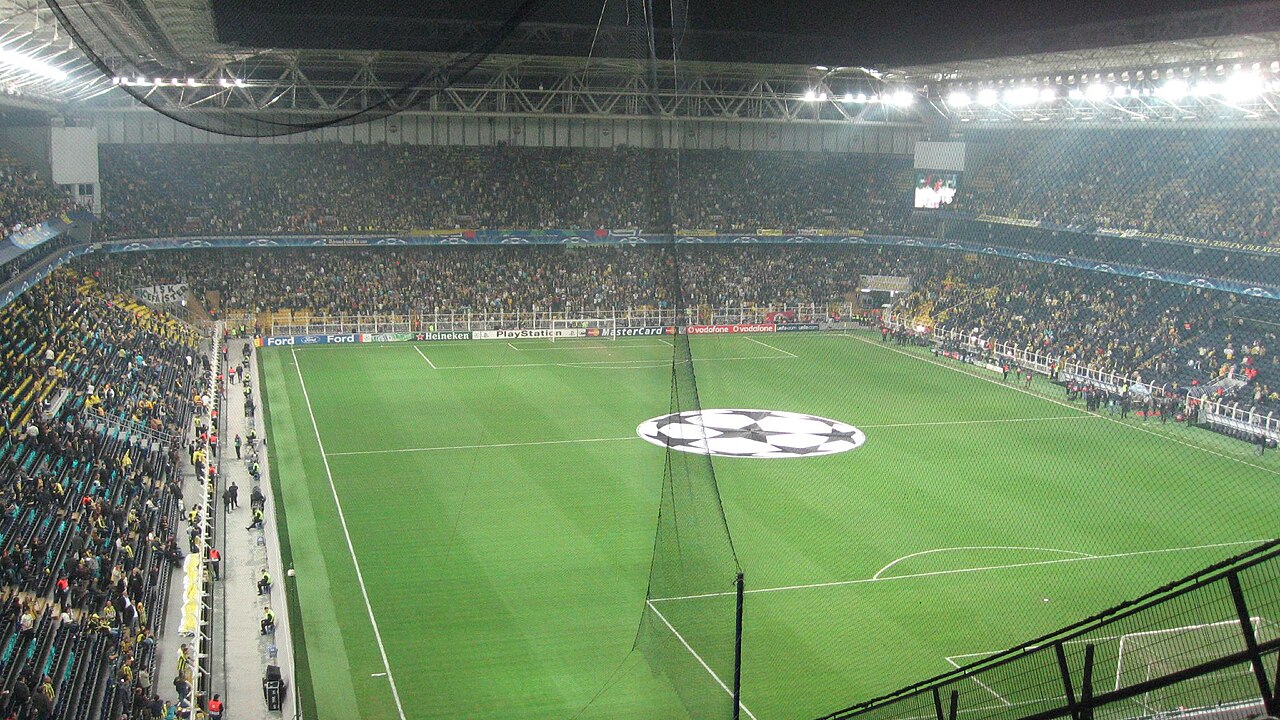
Photo information
Image record and usage information ↗The idea seemed to work in a two-season comparison
Both teams scored in 147 of 306 matches in 1996/97 and 152 of 306 regular-season matches in 2011/12. Wins by three or more goals fell from 70 to 40. This matched regular-season comparison excludes the 24 championship and European play-off games in 2011/12. Within this pair, more scoring at both ends coincided with fewer heavy wins.
Two selected years cannot establish a league-wide relationship. Both 1–1 and 4–1 count as both teams scoring, although the latter remains a heavy win. The measure includes balanced and unbalanced scorelines, making a wider test necessary.
Table values
| Measure | 1996/97 | 2011/12 |
|---|---|---|
| Matches | 306 | 306 |
| Both teams scored | 147 | 152 |
| Margin of at least three | 70 | 40 |
| One-goal margin | 120 | 126 |
| Total goals | 878 | 788 |
Across 64 seasons the direction reversed
Across 64 completed seasons with reconciled match records, the correlation between seasonal both-teams-scoring share and three-goal-margin share was approximately +0.55. The general sample therefore did not show the expected inverse relationship. The weighted heavy-win share was 15.25% in the 16 highest-BTTS seasons and 9.55% in the 16 lowest.
A plausible explanation is that high-scoring environments produce both more scoring at both ends and more results such as 4–1 or 5–2. A low-scoring season can contain many 1–0 matches: few games with both teams scoring, yet narrow margins. Scoring activity and competitive balance are different concepts.
What else measures competition?
Heavy-win frequency, one-goal margins, the spread of points and gaps between the top and bottom must be considered together. A close title race between two clubs does not make the other 16 equally strong. More scoring at both ends also cannot establish higher average technical quality on its own.
The original two-season observation was interesting but did not generalise across the archive. Both-teams-scoring can begin an investigation of competition; it cannot settle it. More teams finding goals and teams becoming closer in strength need not be the same story.