

Historical analysis / Legends
How did Hagi change Galatasaray’s game?
59 goals in 132 league games, four championships and two European trophies. We consider Hagi’s influence as both creator and finisher, rather than treating the trophy list as the whole explanation.
Updated: 29 October 2026
Could a midfielder produce like a striker?
Hagi was 31 when he joined Galatasaray in 1996. His Real Madrid and Barcelona background raised expectations, but what mattered was how that experience translated onto the pitch. He scored 59 in 132 league appearances across five seasons, about 0.45 per game: substantial output for a midfielder also expected to supply the final pass.
Set pieces, shots from distance and late attacking arrivals contributed to that total. Ranking him only alongside centre-forwards misses his responsibilities in moving the ball forward, switching the attack and supplying teammates. His value lay in combining creation and finishing in one player.
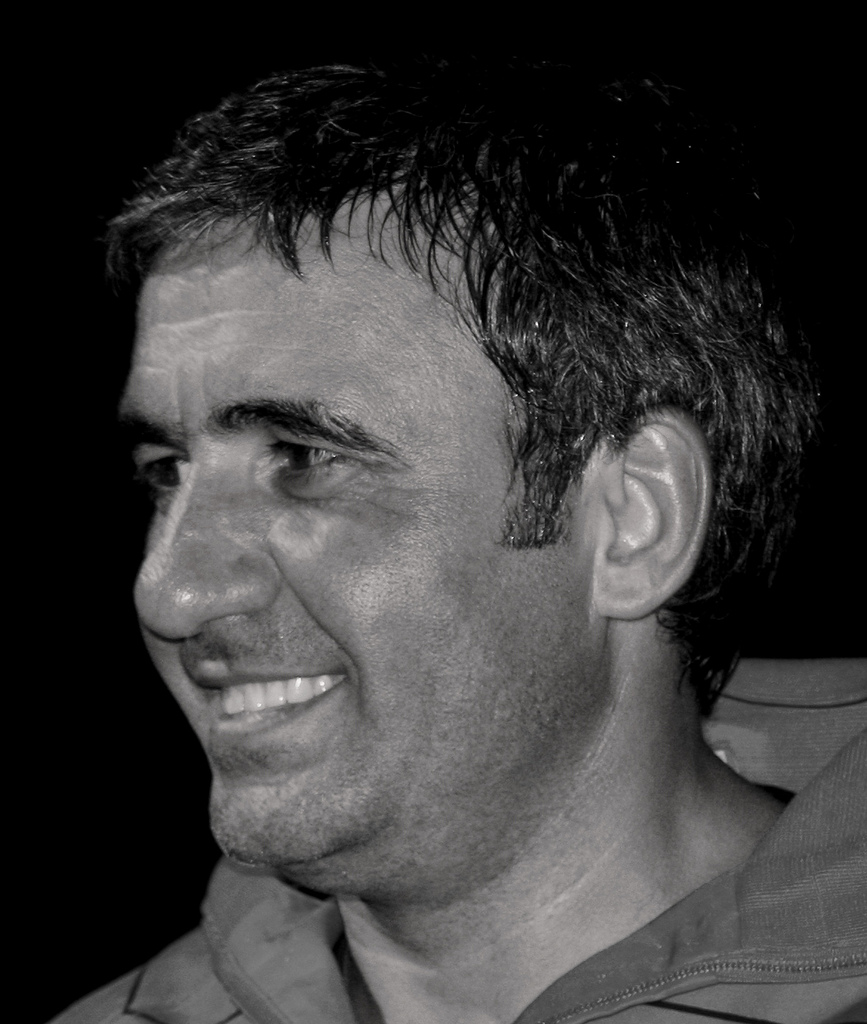
Photo information
Image record and usage information ↗- 1994World Cup quarter-final with Romania
- 1996Galatasaray
- 1997–2000Four consecutive league titles
- 2000UEFA Kupası ve Avrupa Süper Kupası
- 2001Retirement from football
How should we assess his assists?
A historical TFF profile credits him with 51 assists during his Galatasaray spell. That supports the scale of his creative contribution, but its definition cannot be verified as identical to a modern match-event series. We therefore identify it as a historical record and do not convert unknown seasonal assists into zeroes.
In 1996/97 Hagi scored 14 league goals and Hakan Şükür 38. Their combined 52 accounted for about 58% of the team’s 90 goals. Hakan supplied the main finishing force; Hagi added scoring to his creative role. The partnership also cautions against attributing the team’s success to one individual.
Table values
| Scope | Matches | Goals | Goals / match |
|---|---|---|---|
 Galatasaray · ulusal lig | 132 | 59 | 0.45 |
| Romania · senior internationals | 124 | 35 | 0.28 |
| 1994 World Cup | 5 | 3 | 0.6 |
The first four-title run and European trophies
The four championships from 1996/97 to 1999/00 were unprecedented in the national league at that time. Two Turkish Cups, the 2000 UEFA Cup and UEFA Super Cup accompanied them. It was the first four-title run, not the only one in the archive through 2026: Galatasaray repeated four consecutive championships in 2022/23–2025/26. The earlier generation combined the first such run with European trophies.
Fatih Terim’s mobile, pressing side gave room to Hagi’s judgement about when to accelerate play. Yet the team sustained the UEFA Cup final after his red card, and Jardel scored both Super Cup goals. Leadership is not the same as explaining every result through one player. Hagi was a powerful team’s creative centre, rather than a substitute for understanding the team.
The substantial career before Istanbul
He progressed from Farul and Sportul to Steaua, winning three league championships, scoring the winner in the 1987 European Super Cup and playing in the 1989 European Cup final. Real Madrid, Brescia and Barcelona followed. At Brescia he worked with Mircea Lucescu and experienced both relegation and promotion.
He scored 35 times in 124 Romania internationals. At the 1994 World Cup he scored three goals in five games, against Colombia, Switzerland and Argentina. Romania reached the quarter-finals before losing to Sweden on penalties. The player arriving in Istanbul brought experience of carrying a national side’s attacking responsibility, as well as major-club experience.
What did the second spring mean?
His Istanbul years were more than a successful late-career spell. He applied earlier experience in a structure that offered regular football and creative responsibility. His scoring rate, historical assist record and the team’s continuity point in the same direction: Galatasaray gained a decision-maker as well as a finisher. The outcome included production from teammates and sustained collective competitiveness.